Wednesday, April 16, 2014

Recent Risk


Hey everybody!
 
 
I’m happy to see you decided to make another pit-stop at my blog! Last week, I told you about a great website for news in the rodeo industry. This week, I will be covering a more somber topic that has been grabbing attention the rodeo scene. The recent cases of EHV-1 have put many horse owners, especially in the Midwest, on edge.
 
What is EHV-1?
 
Dr. Thomas R. Lenze states EHV-1, equine herpesvirus type 1, causes “respiratory disease, abortion in mares, neonatal foal death and/or neurologic disease” (Lenz, 2011). Approximately 80% of horses carry the disease in their lymph nodes but never show any symptoms. When a carrier horse is stressed by trailering, extensive training, etc., they can potentially 'shed' the virus. The most common form of EHV-1 is the respiratory infection. Horses infected have a fever, depression, nasal discharge, and loss of appetite. In the rarer, deadlier, neurologic form of EHV-1 horses are weak, lethargic, have urinary incontinence, decreased tail tone, and are unable to stand (Lenz, 2011).


Who is at risk?
 
Young horses are especially susceptible to the respiratory form of EHV-1. Older horses and horses that under a lot of stress are more at risk for the neurological form. If your horse is frequently being trailered, experiencing extensive training, or attending shows/rodeos they might be a higher risk as well (Lenz, 2011).


Current Cases
 
Outbreaks of EHV-1 have occurred multiple times in the past. Unfortunately, the disease has decided to break out again in 2014. The outbreak began in Minnesota and Wisconsin but has now spread to locations all across the country including Colorado and Iowa (“EHV-1Outbreaks Across United States,” 2014). Many of the infected horses have recovered but some have had to be euthanized.

What can I do to reduce my risk?
 
Because of carrier horses that don’t show clinical signs, containing this virus is extremely difficult. That is why outbreaks of EHV-1 can be so devastating. However, there are many steps you can take to reduce the risk of your horse becoming infected with EHV-1. Tara Christianson for The American Quarter Horse Journal provides some key guidelines for keeping your horses healthy (Christianson, 2011).
 
·         Work with your veterinarian to develop a vaccination/prevention plan
 
·         Vaccinate for EHV-1 and provide boosters appropriately
 
·         Do not share equipment and avoid nose-to-nose contact with other horses
 
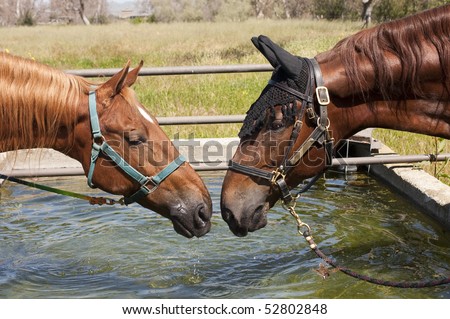
·         Do not use communal watering tanks or hoses
 
·         Clean and disinfect stalls and equipment periodically
 
·         Keep health certificates and Coggins papers current
 
·         Make biosecurity a priority on the road and at home


For more information about equine herpesvirus type 1 and updates on the latest outbreaks, you can visit the American Quarter Horse Association’s website or by clicking here.
 
Keep your horses safe and healthy!
 
 
Emily Engelhard

Wednesday, April 9, 2014

"Nothin' but Rodeo"


Hey Everybody!


Thanks for checking in! Last week, things got a little silly at this blog. I discussed a funny video created by the Sam Houston State Rodeo Team. A couple of amazing videos showcasing the talented horses in the rodeo industry were also included. Check it out if you haven’t already by clicking on this link!


The Rodeo News magazine is one of the main places I go to get my rodeo fix. Rodeo News is “the pioneer for quality information and coverage connecting all rodeo enthusiasts” (“Vision Statement,” Therodeonews.com). The magazine is published 21 times per year, semimonthly March – November and once in December, January, and February. However, the Rodeo News magazine can also be found entirely on their website. This converged way of publishing makes it easy for readers to access information at their leisure. This week, I’m going to provide you with my analysis of the website.


In their book, Agricultural Communications in Action, Telg and Irani state that good web design principles include division of space, balance, visual vectors, repetition, contrast, and typography (2012). The Rodeo News website is very strong in the majority of web design principles but could also improve on some aspects.

The website is presented in a block-like structure giving it a very formally balanced appearance; items are symmetric on the left and right sides of the page. This layout allows the reader to skim the page quickly to access the stories they are most interested in. I would recommend a little more contrast between the background and the type. However, contrasting colors are used well in specific articles and pictures.


The visual vectors, lines, of the page draw the reader’s eyes across and down the page very smoothly. All sections of the website are very systematically organized. Changing the sizes of different feature story blocks could make the home page a little more creative. The repetition of the navigation buttons to various parts of the website give the reader easy access to any part of the site. All of the fonts on the website are very easy to read, but the titles of the articles could be more unique to grab the reader’s attention.
 

I encourage you to visit this website to get plenty of rodeo news, contestant profiles, photos, and testimonials. If you love rodeo, I promise that you’ll love this site!


See you next time!


Emily Engelhard

Wednesday, April 2, 2014

Just Some Fun


Hey there!


I’m glad to see you back once again. I think I’m finally starting to get the hang of this blog-writing stuff! Thanks for stopping in again to see what’s new. In the last post, I talked about a handful of the amazing people that have made an impact on the sport of rodeo. Charmayne James, Joe Beaver, and Billy Etbauer are a true inspiration to anyone with dreams in this sport.

This week, I’m having a little fun with the subject matter! I have found some videos that I would like to share with you that show some interesting aspects of rodeo.

Rodeo has a lot of blood, sweat, and tears but it is also so much fun. As with any sport, competitors like to kick back every once in a while and be a little silly. This first video is of the Sam Houston State University Rodeo Team. No booing from the NDSU fans. I’m one of you, I promise! These college contestants decided to make their own video for the famous song “Gangnam Style.” Although they didn’t change the words of the song, it is still pretty humorous! In the sport of rodeo, your friends turn into your family. It may be a dysfunctional family but they will always be supportive and up for some laughs.


These next few videos aren’t necessarily clever or funny, but I want to share them with you because I think they shed light on a particular part of rodeo. Rodeo horses are sometimes overshadowed by their more technically impressive counterparts, such as reining horses or cutting horses. I often hear people say that barrel horses are out of control or that a roping horse doesn’t have any real talent. The horses and riders in these next two videos show that is definitely not the case. 


It takes years to train a roping horse. It takes even longer to train one to be a heading horse, heeling horse, or calf roping horse. In the video, Trevor Brazile and his great calf roping horse, Texaco, compete at an American Quarter Horse Association event during the Fort Worth Stock Show Rodeo (Johnston,2010). This was Brazile’s very first time roping bridles on Texaco. You can get more information about his run from this article.


Charmayne James’ bridleless run was unintentional but still showcases the intelligence of rodeo horses. This run took place at the 1985 Wrangler National Finals Rodeo on Friday the 13th. Kenneth Springer, a photographer during the Finals, commented on their ability to hold it all together and even win the round. He said, “That [run] spoke volumes about her as a focused, quick thinking and athletic individual” (James and Wheatley, n.d.). To find out more information about Scamper and Charmayne James, please visit this article.
(Click here for the video)


Thanks again for stopping by my blog. See you next time!


Emily Engelhard
Thursday, March 27, 2014

The Greats


Welcome back!

 
I appreciate you stopping by again! I talked to you about the timed events in rodeo in my last blog post. This week, I’m going to tell you a little bit about some of the most famous faces in the rodeo industry. I would need to write a book or two to include all of the wonderful people who have made an impact on the sport, so for time’s sake I’m only going to go into detail about a few. Some of the people who have made history include Billy Etbauer, Charmayne James, and Joe Beaver.
 
 
On the roughstock side of rodeo, Billy Etbauer is one of the greatest saddle bronc riders of all time. Known for his unending humility, Etbauer first qualified for the National Finals Rodeo in 1989 and went on to qualify for a consecutive 21 years (“Billy Etbauer,” Prorodeohalloffame.com). He was the first competitor to ever earn more than $3 million career earnings in a single event. Not only was he an extremely successful saddle bronc rider, he won his final World Championship just one month shy of 42 years old. Etbauer holds the record for the oldest roughstock champion and the National Finals Rodeo record of a 93 point ride in 2003 (“BillyEtbauer,” Prorodeohalloffame.com).


If you know anything about barrel racing, then you know the name Charmayne James. It’s the equivalent of saying names like “Michael Jordan” or “Babe Ruth.” Her professional barrel racing career began at the young age of 14 when she won her first World Championship in 1984 (“AboutCharmayne,” Charmaynejames.com). 9 consecutive World Championships followed this initial success along with her 11th and final win in 2002. James’ Hall of Fame horse, Scamper, carried her for her first 10 wins. James herself was inducted into the National Cowgirl Hall of Fame in 1992. She was the first $1 million earner and she remains the sport’s all-time leading money earner (“About Charmayne,” Charmaynejames.com).


And lastly, tie-down roper Joe Beaver was inducted into the Pro Rodeo Hall of Fame in 2000. Beaver’s love of roping started 30 years prior when he was merely 5 years old roping goats from the back of a Shetland pony. His talent and determination brought him to the top of the roping industry very quickly. In 1985, Beaver won his first World Champion title at 20 years old setting the record as the youngest tie-down roper to ever win. An injury halted his career in 1999, but not before he won 4 more World Championships and 3 all-around titles (“Joe Beaver,” Prorodeohalloffame.com). He continues to be a fixture in the rodeo world commentating at the National Finals Rodeo every year.


If you would like to know more about the people who have done amazing things in the sport of rodeo, you can visit the Pro Rodeo Hall of Fame online.


See you next time!


Emily Engelhard

Wednesday, March 5, 2014

Timed Events


Hello!


I’m glad to see you are starting to become a regular visitor to this blog! Last week, I discussed the drama and controversy surrounding the potential relocation of the Wrangler National Finals Rodeo. This week, I’m going to pick up where I left off in explaining the different events in a typical rodeo. Now I am going to give you some brief descriptions of the timed events!

Although they may not be as dangerous as the scored events, they are definitely just as exciting! Once again, I have excluded events that would not take place at a professional rodeo.

 
Steer wrestling, also called bulldogging, is considered the “Big Man’s” sport and for good reason! Two cowboys, two horses, and one steer are involved in this event. Both cowboys back into the roping boxes and when the bulldogger is ready he nods his head to signal to the chute man to let the steer run. Then both horses run up on either side of the steer while the bulldogger slides off the side of his horse and wrestles the steer to the ground. The timer stops once all of the steer’s legs are straight out to the side and he has landed on the ground (“Steer Wrestling,” Prorodeo.com).

 
Team roping begins in the same way as steer wrestling, except the cowboys now have ropes and they stay on their horses. A header, on the left side, ropes the horns/neck of the steer, dallies onto his saddle horn, and pulls the steer so that the heeler can make his catch. The heeler then ropes the back two legs of the steer and dallies onto his own saddle horn. The timer stops when both cowboys’ horses are facing each other and the ropes are pulled tight. Ropers get a five second penalty if they only catch one of the back legs (“Team Roping,”Prorodeo.com).

 
Unlike the previous two, tie-down roping, also called calf roping, only has one cowboy and a calf instead of a steer. The calf comes out of the chute and the cowboy runs out of the roping box just like the other events. The rope the calf roper uses is fixed to his saddle horn unlike team roping. Once he ropes the calf, he steps off his horse, runs down the rope, flanks the calf, and then ties three of his legs with a piggin’ string. The timer stops when the cowboy throws his hands in the air, signaling the end of his tie. He then gets back on his horse and loosens the rope around the calf. If the calf stays tied for 6 seconds, the cowboy receives a time (“Tie-Down Roping,” Prorodeo.com).

 
Barrel racing, the only women’s event, is just a girl, her horse, and the timer. The team runs a cloverleaf pattern around 3 barrels either going to the right or the left barrel first. The run starts and stops when the horse crosses the timer at the end of the arena. Each knocked over barrel is a 5 second penalty which usually buts the barrel racer out of the money considering this event comes down to hundredths of a second (“Barrel Racing,” Industryhillsprorodeo.com). Barrel racing may seem simplistic, but it takes perfect timing and grace.


See you next week!


Emily Engelhard

Thursday, February 27, 2014

The Super Bowl of Rodeo


Hello Readers!


I hope you are having a fantastic day! I’m glad to see you back at my blog. Last week, I talked to you about all of the scored events in the sport of rodeo. This entry is going to be all about the controversy and the drama surrounding the potential relocation of the Wrangler National Finals Rodeo.

Professional contestants work the entire year to make it to the Wrangler National Finals Rodeo, WNFR for short. To compete in the Thomas and Mack Center in Las Vegas is one of the greatest accomplishments a rodeo competitor can achieve. It’s every little cowboy and cowgirl’s dream, including my own. The rodeo runs for 10 days straight during the beginning of December with competitions every night. In order to qualify for the WNFR, competitors must be in the top 15 money earners for their event. The world champion of a particular event is determined by whoever earned the most money by the end of the 10 days. Average money is also factored into this ending balance. To win the average, which is usually a significantly large amount of money, contestants must have the fastest average time or highest average score over the duration of the WNFR.

Considering that the WNFR had been held in Las Vegas for 29 years straight (Katsilometes, 2013), it was a shock to hear that the Professional Rodeo Cowboy Association decided to consider other venue options. The PRCA voted to decline the offer made by Las Vegas Events representatives to renew the contract to remain in the Nevada city. The Osceola County (Fla.) Commission had made a very appealing offer to the PRCA. In 2016, the WNFR would be held in a brand new facility with the ability to hold up to 24,000 people (Katsilometes, 2013).  The Osceola County Commission’s offer was also $4 million more than the Las Vegas Events’.

The committees reached a final decision by the end of January, 2014. The Las Vegas Board of Trustees and the PRCA announced that the WNFR will remain in Las Vegas until 2024 after a unanimous vote on the issue (“Las Vegas Events and PRCA Agree on Extension,” 2014). $10 million in contestant winnings along with $3 million guaranteed to the stock contractors is also a part of the deal between the two groups.   In 2013, Las Vegas received over $87 million in non-gaming revenue over the 10 days the WNFR was in town (“Las Vegas Events and PRCA Agree on Extension,” 2014).

Luckily, the “Super Bowl of Rodeo” will remain in Vegas for another decade. Tradition is a very important aspect of the rodeo culture and I believe that this decision is a great one. I can’t wait for the day I can make a trip to Vegas for the most exciting rodeo event in the world!


Emily Engelhard


Wednesday, February 12, 2014

Scored Events


Welcome back!
 

Thank you for visiting my blog, again! In order to learn about new issues and topics, we have to know what we are talking about! In this blog entry, I will be providing you with descriptions about the scored rodeo events as well as some rodeo jargon.

A typical amateur or professional rodeo operates in two parts: performance and slack. Spectators typically attend the performance because it is usually the event that is advertised. A limited number of contestants are allowed to compete in the performance so the show doesn’t run all night. All of the remaining contestants compete at a preliminary time, commonly known as slack (“Rodeo Terminology,” Prorodeo.com). The results of the entire rodeo are calculated by compiling the performance and the slack together.

Youth rodeos and some amateur rodeos have more events than the professional rodeos. In lower level rodeos there may be events such as polebending, goat tying, and breakaway roping in addition to the typical events of tie down roping, barrel racing, team roping, and steer wrestling. All of these events are timed events, meaning the fastest time wins. For this blog, I will only be describing the events that are scored, meaning the highest score wins. All of my event descriptions contain information from various articles on Prorodeo.com, the official site of professional rodeo.

I’ll start with bull riding, which tends to be the most popular event. For 8 seconds, a cowboy must stay aboard the bull without touching him with his free hand in order to get a score. The other hand is fixed into a rope which is tied around the bull right behind his front legs (“Bull Riding,” Prorodeo.com). The ride is judged on the cowboy’s ability to stay aboard the bull and may be increased with spurring or if the bull is particularly difficult to ride.

Bareback riding involves a cowboy and a horse instead of a bull. It has been compared to “riding a jackhammer with one hand” (“Bareback Riding,” Prorodeo.com). For 8 seconds, the cowboy must ride the horse without touching the horse with his free hand. The other hand is secured in a rigging, which looks like the handle on a suitcase. Riders are scored based on how difficult the horse is to ride as well as spurring technique and form.

Lastly, there is saddle bronc riding which also involves a cowboy and a horse. In this event, the cowboy is seated in a saddle and hangs on with one hand to a rope connected to the horse’s halter. If he can stay on for 8 seconds, maintain a smooth motion of spurring, and keep from touching the horse with his free hand, he will get a score (“Saddle Bronc Riding,” Prorodeo.com).

Well, I hope I have provided you with enough info to get you familiar with the scored events of rodeo. I hope to see you back here again!


Emily Engelhard